

USC Viterbi School of Engineering


When scientists made the historic first detection of gravitational waves in 2016 — confirming a century-old prediction by Einstein — USC was behind the scenes making it possible.
USC ISI's Pegasus Workflow Management System had spent 15 years working with LIGO, automating the analysis of tens of terabytes of data and running millions of computational tasks that helped prove one of physics' greatest theories. The same software also generated the first physics-based probabilistic seismic hazard map of Southern California.
Today that tradition of AI-accelerated discovery continues across every scientific frontier: USC researchers have developed an AI model capable of simulating billions of atoms simultaneously to unlock new materials; AI tools are decoding the Earth's subsurface to advance CO₂ storage and energy resource management; USC scientists have built a system that can draft a full research paper in under an hour; and AI is compressing years of trial-and-error alloy discovery into weeks.
When scientists made the historic first detection of gravitational waves in 2016 — confirming a century-old prediction by Einstein — USC was behind the scenes making it possible.
USC ISI's Pegasus Workflow Management System had spent 15 years working with LIGO, automating the analysis of tens of terabytes of data and running millions of computational tasks that helped prove one of physics' greatest theories. The same software also generated the first physics-based probabilistic seismic hazard map of Southern California.
Today that tradition of AI-accelerated discovery continues across every scientific frontier: USC researchers have developed an AI model capable of simulating billions of atoms simultaneously to unlock new materials; AI tools are decoding the Earth's subsurface to advance CO₂ storage and energy resource management; USC scientists have built a system that can draft a full research paper in under an hour; and AI is compressing years of trial-and-error alloy discovery into weeks.
When scientists made the historic first detection of gravitational waves in 2016 — confirming a century-old prediction by Einstein — USC was behind the scenes making it possible.
USC ISI's Pegasus Workflow Management System had spent 15 years working with LIGO, automating the analysis of tens of terabytes of data and running millions of computational tasks that helped prove one of physics' greatest theories. The same software also generated the first physics-based probabilistic seismic hazard map of Southern California.
Today that tradition of AI-accelerated discovery continues across every scientific frontier: USC researchers have developed an AI model capable of simulating billions of atoms simultaneously to unlock new materials; AI tools are decoding the Earth's subsurface to advance CO₂ storage and energy resource management; USC scientists have built a system that can draft a full research paper in under an hour; and AI is compressing years of trial-and-error alloy discovery into weeks.
Academic Departments


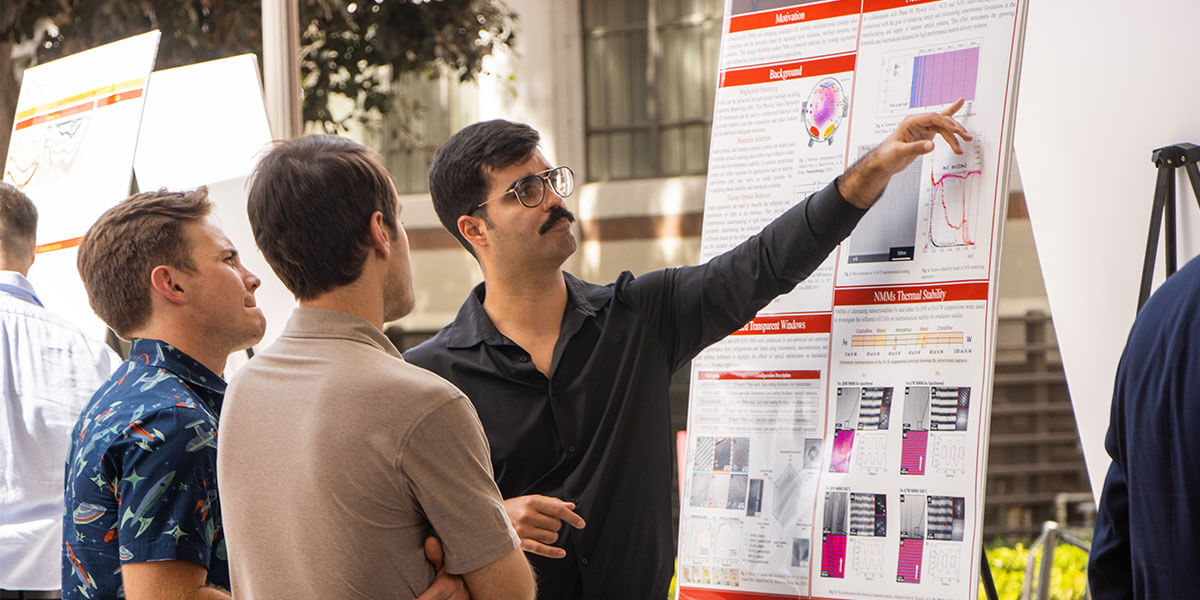


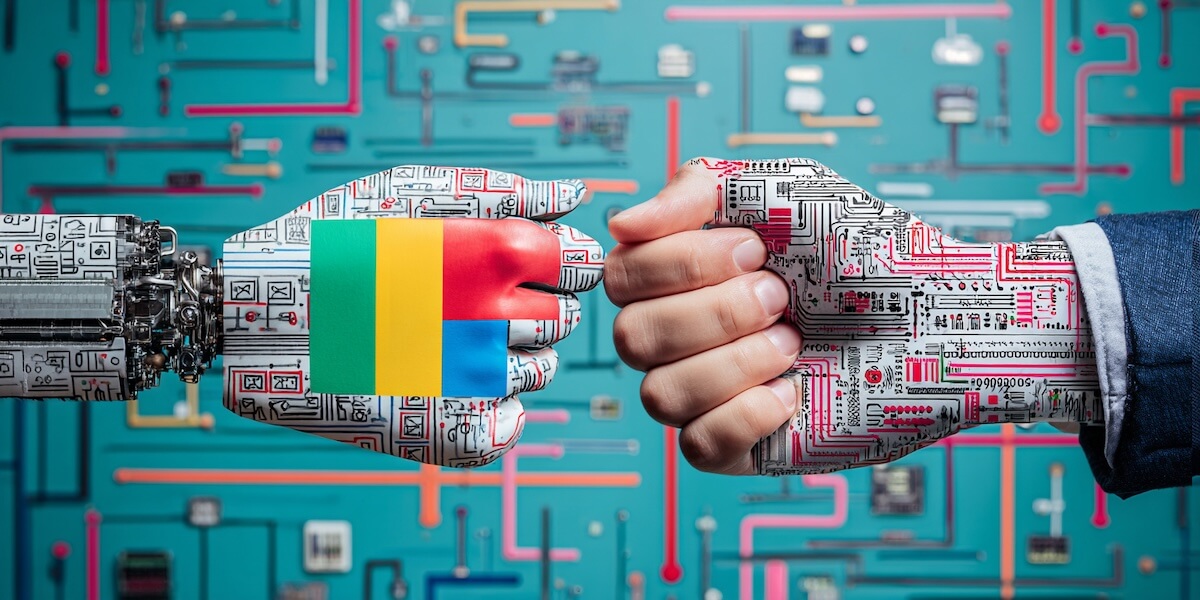
Rooted in an interdisciplinary approach, the School of Advanced Computing, a unit of USC Viterbi, serves as the hub for advanced computing research and education at USC.
Recent Highlights



Published on April 22nd, 2026
Last updated on April 29th, 2026