
The Power of Following Through
USC Viterbi graduate Alex Wang turned curiosity, leadership and a passion for public service into an extraordinary four-year journey.

Read More
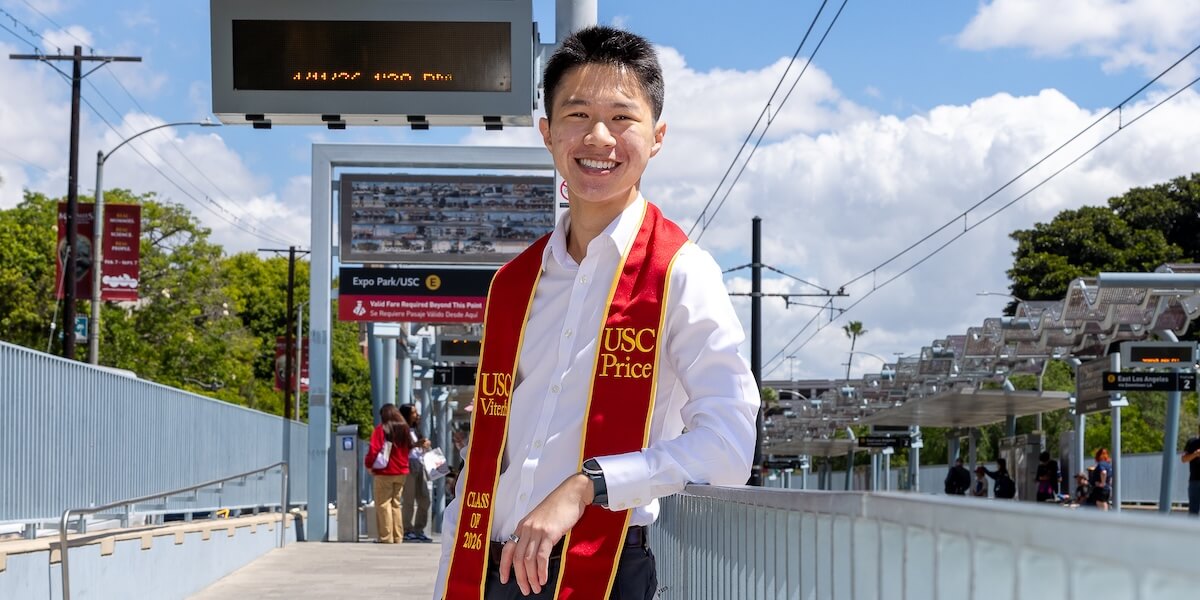
USC Viterbi graduate Alex Wang turned curiosity, leadership and a passion for public service into an extraordinary four-year journey.
Read More

A study by USC Viterbi researchers indicates that nicotine-free e-cigarettes can disrupt the heart’s oxygen supply-demand balance, a key indicator of cardiovascular health.
Read More

USC Research Finds AI Strong in Empathy with Promising Potential for Mental Health Support, but Models Still Struggle With Safety Concerns
Read More

USC Viterbi researcher wins NSF Career Award and aims to study how quantum computing can transform database optimization for a data-intensive future
Read More

USC Researchers to Present 4 Papers at EC 2026: Advancing Algorithmic Fairness, Market Design and AI at the Intersection of Economics and Computing
Read More

Researchers will spotlight USC Viterbi’s strengths in machine learning, AI and responsible AI research at the prestigious conference.
Read More

Recognized for foundational contributions to software architecture and large-scale systems design, Medvidović reflects on research, mentorship and solving problems that matter.
Read More
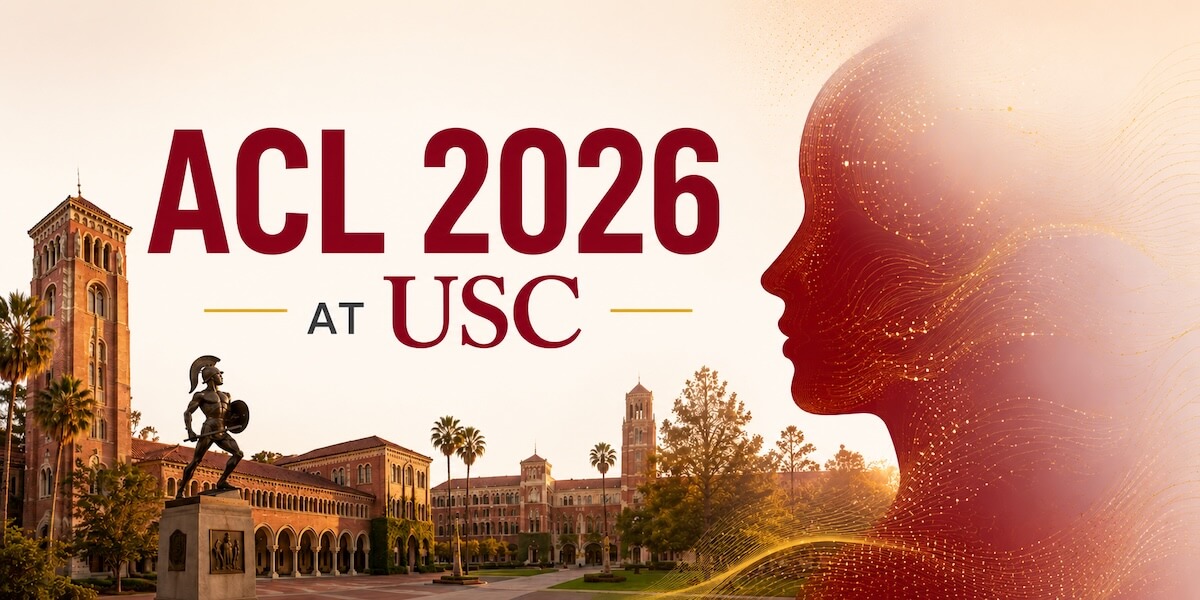
The prestigious conference brings together researchers and practitioners to share advances in natural language processing.
Read More

Professor Noah Malmstadt, newly appointed chair of the USC Mork Family Department of Chemical Engineering and Materials Science, discusses the energy and manufacturing challenges that connect the disciplines, and why the future of the department is built on firm foundations.
Read More

Professor Assad Oberai, newly appointed chair of USC Viterbi’s Department of Aerospace and Mechanical Engineering (AME), discusses how advances in computation, autonomy and artificial intelligence are reshaping the field – and where AME should focus its efforts next.
Read More

USC Viterbi researcher Emilio Ferrara has built a tool that can map communities inside massive social, biological, and financial networks faster and smarter than anything that came before.
Read More

On one of his final trips as dean of the Viterbi School of Engineering, Yortsos celebrated new scholarships, reconnected with alumni, and inspired the next generation of Trojans in India.
Read More

After 21 years as dean, Yortsos honored with six new philanthropic initiatives that bear his name.
Read More

Twenty-One Years. Twenty-One Questions. A Q&A with USC Viterbi’s longest serving dean.
Read More

Two leading conferences, L4DC and NeuS, converged at USC to tackle the same hard problem from two directions: how do we trust machines that learn?
Read More

Need patriotic stamps? We’ve got you covered. Check out our collection of 14 USC computer scientists and engineers who helped build the modern computing world. Also, they’re animated.
Read More

3 USC faculty will lead research projects funded by the Toyota Research Institute
Read More

USC Viterbi researchers can now predict when a false rumor will jump from one social media platform to another, giving journalists and fact-checkers a chance to step in before it goes mainstream.
Read More

A DARPA-funded team at USC Viterbi aims to generate fictional but realistic schemes to stress-test the algorithms that may one day make dirty money impossible to hide.
Read More

USC Viterbi researchers have proved that fracture geometry can suppress unstable flow patterns and enhance fluid mixing, with implications for groundwater remediation, carbon storage, hydrogen storage and energy production.
Read More

USC Rocket Propulsion Lab’s third successful spaceshot, Daybreak, carried payloads for other student organizations and validated new technologies that expand the team’s ability to return to space on repeat.
Read More

USC engineers have developed a new CAR T-cell therapy that can adapt to almost any solid tumor, attack with precision and spare healthy tissue.
Read More

Materials science researchers at USC Viterbi School of Engineering have addressed a longstanding problem in ferroelectric materials measurement, with implications for next-generation technologies including quantum communication and advanced photonic devices.
Read More

USC Viterbi’s Maryam Shanechi aims to develop AI models to improve neuromodulation and enable adaptive treatment for cerebellar disorders