50 Years of Engineering Better Health
BME 50 – The Alfred E. Mann Department of Biomedical Engineering at USC Viterbi and Keck celebrated 50 years of excellence and innovation with a two-day gathering


Read More
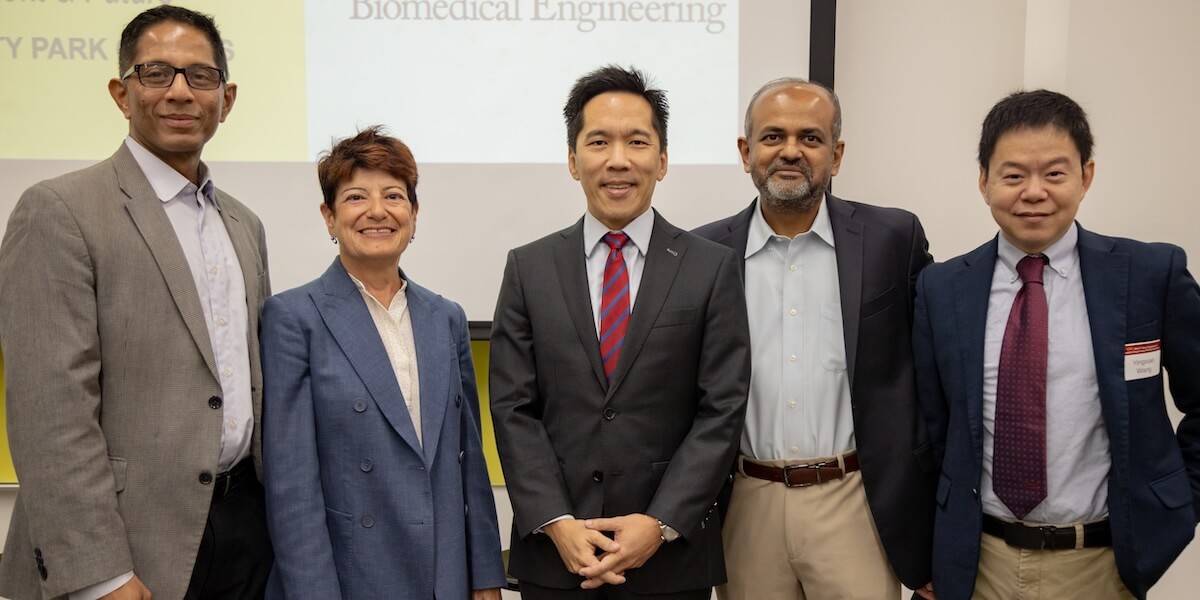
BME 50 – The Alfred E. Mann Department of Biomedical Engineering at USC Viterbi and Keck celebrated 50 years of excellence and innovation with a two-day gathering
Read More

USC researchers developed a technique that uses focused ultrasound to temporarily “light up” solid tumors, giving cancer-fighting immune cells a target they can finally recognize.
Read More

By combining quantum computing with artificial intelligence, USC researchers are laying the groundwork for medical imaging tools that could help doctors diagnose cancer and plan treatments more precisely
Read More

A new NSF-funded project will create an open-source framework that traces AI errors to their source, helping researchers and clinicians build more trustworthy medical AI systems
Read More

New study is first to develop algorithm that learns an individual’s preferred vibration patterns, opening the door to personalized haptic experiences in gaming, mental health and automobiles
Read More

An NIH Trailblazer Award is supporting USC Viterbi Assistant Professor Hangbo Zhao’s research on flexible medical electronics designed to give physicians new insights into high-risk artery plaque.
Read More

USC researchers have developed a new “black box” tool to measure the softness of tumor cells, an insight that could be crucial for more effective cancer treatment.
Read More
![PROFESSOR LONGWEI LIU [PHOTO COURTESY OF SHANSHAN QIN]](https://viterbischool.usc.edu/wp-content/uploads/2023/11/Longwei-Liu-1.jpg)
The ophthalmology researcher and biomedical engineer aims to create cures that remotely trigger cell and gene therapies for conditions ranging from a genetic disorder that can rob infants of their vision to cancer.
Read More

A study by USC Viterbi researchers indicates that nicotine-free e-cigarettes can disrupt the heart’s oxygen supply-demand balance, a key indicator of cardiovascular health.
Read More

Twenty-One Years. Twenty-One Questions. A Q&A with USC Viterbi’s longest serving dean.
Read More

Need patriotic stamps? We’ve got you covered. Check out our collection of 14 USC computer scientists and engineers who helped build the modern computing world. Also, they’re animated.
Read More

AO Technologies, founded by USC researchers John Oghalai and Brian Applegate, has secured an ARPA-H small business award to develop a cochleoscope for clinical imaging of the inner ear.
Read More

USC engineers have developed a new CAR T-cell therapy that can adapt to almost any solid tumor, attack with precision and spare healthy tissue.
Read More

USC Viterbi’s Maryam Shanechi aims to develop AI models to improve neuromodulation and enable adaptive treatment for cerebellar disorders
Read More

A novel teaching tool built by USC engineering students in collaboration with USC Physical Therapy Professionals enables enhanced modeling and understanding of spinal cord mobility.
Read More

A wearable, noninvasive device uses sound waves and gene therapy to regulate the heartbeat, no implants required
Read More

USC Viterbi researchers have discovered that a naturally occurring nanoparticle found in urine shows early promise as a treatment, and potentially a prenatal intervention, for a rare disease that kills newborns and has no approved therapy.
Read More

USC researchers built a robotic hand that hears a melody once and plays it back after just two minutes of self-taught practice on a keyboard. They say the implications go far beyond music.
Read More

New study introduces silver coils with flexible design and improved signal strength, enabling customized production for patient-specific scans
Read More

From 35 countries and equipped with the skills to advance their chosen field of engineering, the Viterbi Class of 2026 gathered to celebrate degrees earned across oceans, languages, and cultures.
Read More
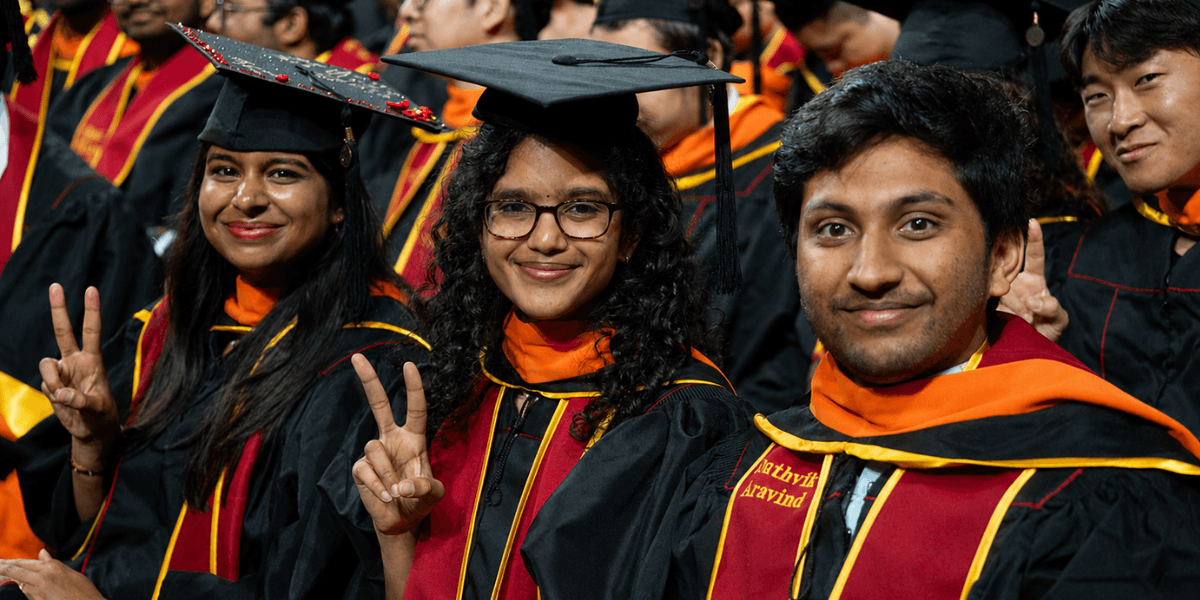
More than 3,500 engineering students gathered at the Galen Center on May 15 to celebrate the USC Viterbi School of Engineering’s Class of 2026 master’s commencement ceremonies, marked by keynote addresses.
Read More
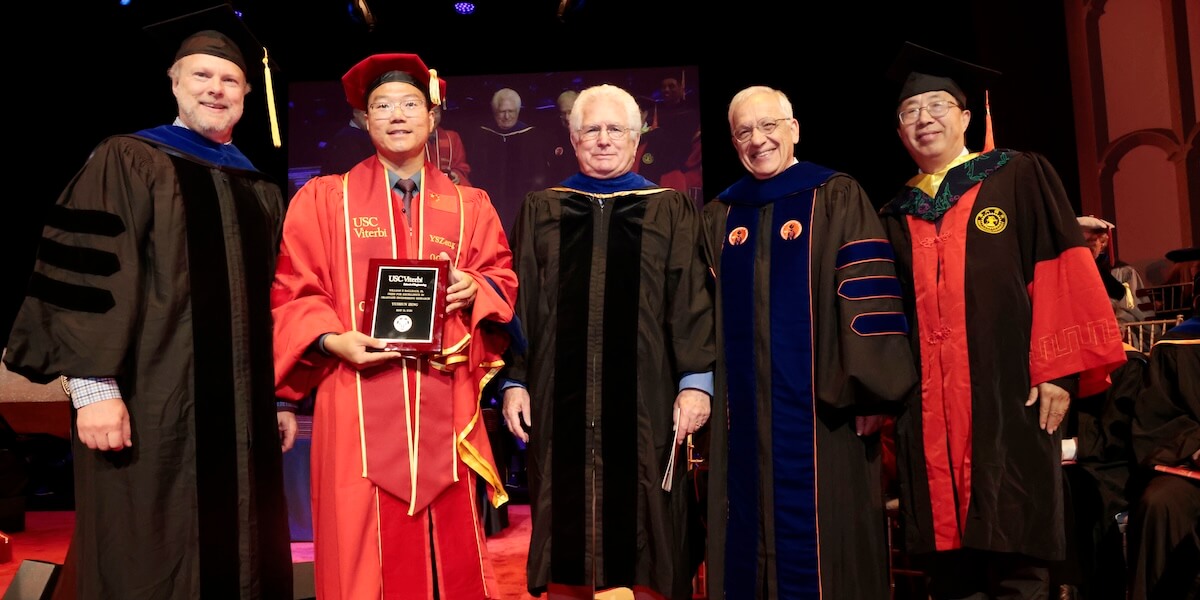
The Class of 2026 gathered at Bovard Auditorium to celebrate years of research, discovery and impact.
Read More

CLASS OF 2026 – The first in her family to earn a bachelor’s and a graduate degree, this USC Viterbi graduate completed her Master’s in Medical Imaging and Imaging Informatics from Dallas, Texas, working full-time and 1,500 miles from campus, with an entire family ready to fly in and watch her cross the stage.
Read More

From healthcare diagnostics to electric mobility, founders pitched real-world solutions at USC Viterbi’s inaugural Startup Showcase.